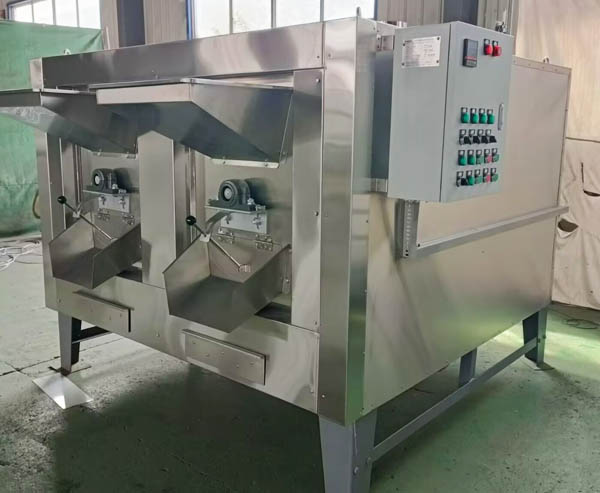

As a popular nut, peanut is not only delicious, but also rich in nutrition. In order to ensure the best taste and nutritional value of roasted peanuts, the temperature setting during roasting is very important. This paper will discuss why the temperature setting of peanut roasting machine is so important and how to set the roasting temperature correctly.
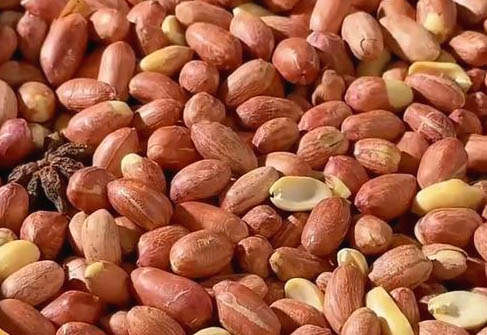
The Optimal Temperature Range: 150°C to 180°C and What Happens Inside
The widely recommended operating window for peanut roasting machines is 150°C to 180°C. Within this range, peanut oil is fully mobilized and aroma development reaches its peak. However, the choice between the lower and upper ends of this spectrum produces distinctly different outcomes.
Low-Temperature Roasting (150–160°C): Uniformity and Depth
Low-temperature profiles are preferred when consistency and depth of flavor are priorities. At 150°C, peanuts undergo gradual moisture evaporation and sustained Maillard activity, allowing the interior to reach full roast while the exterior develops color slowly. This minimizes the risk of case-hardening—where the surface seals before internal moisture escapes—which is a common defect in high-temperature roasting.
For industrial peanut roasting machines, low-temperature operation also offers an oxidative stability benefit. Maillard reaction products formed during controlled heating exhibit antioxidant activity that helps retard lipid oxidation during subsequent storage . This directly supports extended shelf life without synthetic additives.
High-Temperature Roasting (170–180°C): Speed and Surface Character
Higher temperatures accelerate surface browning and can produce a more pronounced roasted, almost toasted top-note. However, the margin for error narrows considerably. The outer layers of the peanut can reach temperatures sufficient for pyrolysis before the core has fully gelatinized its starches and driven off sufficient moisture.
Practical roasting protocols sometimes combine temperature stages—for example, initial roasting at 180°C followed by a finishing phase at 150°C—to balance surface color development with interior doneness. While such approaches appear in home-scale recipes, industrial peanut roasting machines with programmable logic controllers (PLC) can execute multi-stage profiles with far greater repeatability, adjusting burner output or airflow without manual intervention.
Varietal Sensitivity: Not All Peanuts Roast Alike
Different peanut varieties respond differently to identical roasting machine settings. Genetic differences in oil content, sugar composition, and moisture holding capacity mean that a profile optimized for one cultivar may under-perform on another.
Chinese research on peanut flavor precursors indicates that varieties with darker seed coats—such as the “Black Pearl” cultivar—produce stronger roasted aroma compounds than lighter-coated varieties under the same conditions . This suggests that seed coat chemistry interacts with Maillard pathways during roasting. For processors sourcing multiple varieties, maintaining separate roast profiles in the peanut roasting machine’s control system is not optional—it is essential for product consistency.
Moisture content at the point of roasting also modulates outcomes. Higher-moisture kernels brown faster at 150°C than low-moisture kernels, with corresponding differences in free amino acid and sugar availability for Maillard reactions . Pre-roasting moisture equilibration, therefore, belongs in the standard operating procedure alongside temperature setting.
Besides temperature, roasting time is also an important factor. Usually, the roasting time of peanuts is between 15 and 20 minutes, but it also needs to be adjusted flexibly according to the actual situation. It is suggested to check the state of peanuts regularly during roasting to ensure that they reach the ideal roasting state.
All in all, the temperature setting of peanut roasting machine is a problem that needs careful consideration. Only at the right temperature and time can we make roasted peanuts with excellent taste and rich nutrition. For producers, mastering this skill is undoubtedly an important step to improve product quality.
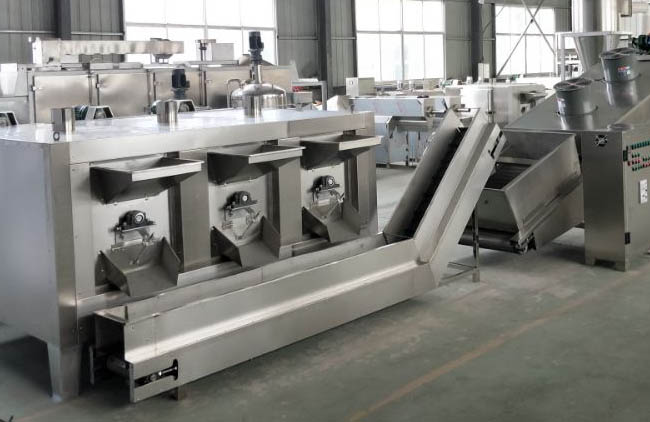
Industrial Peanut Roasting Machine Capabilities: What to Look For
When evaluating a peanut roasting machine for commercial production, temperature range alone is an insufficient specification. Consider these control features:
For continuous roasting lines, the ability to log temperature curves and compare them against reference profiles provides traceability that buyers increasingly demand. Factory acceptance testing should include temperature stability verification under load, not just empty-drum calibration.
Troubleshooting Common Temperature-Related Roasting Defects
Surface burnt, interior raw. Cause: Temperature too high, time too short. The exterior reaches pyrolysis temperatures before heat penetrates the core. Solution: Reduce temperature to 160°C or below and extend time; verify that the roasting machine’s airflow is not creating localized hot zones.
Astringent, “green” flavor. Cause: Insufficient total heat exposure. Pyrazine formation requires adequate thermal energy input; under-roasting leaves precursor compounds unconverted. Solution: Increase time at 150–160°C rather than raising temperature, which risks surface defects.
Uneven color across batch. Cause: Poor airflow distribution or overloading the drum. Solution: Reduce batch size to recommended fill levels and inspect the peanut roasting machine’s air circulation system for obstructions or design limitations.
Rapid staling after roasting. Cause: Inadequate moisture removal during roasting, or insufficient Maillard-derived antioxidant formation. Solution: Ensure roasting time is sufficient at the chosen temperature to drive off surface moisture; do not rely on high temperature alone for moisture reduction.
FAQ
What temperature should a peanut roasting machine be set to for commercial production?
Most commercial operations run between 150°C and 180°C. For consistent, uniform roast with minimal defect risk, 150–160°C with proportionally longer time is preferred. Higher temperatures (170–180°C) may be used for specific product profiles but require tighter monitoring.
How long should peanuts roast at 150°C in a peanut roasting machine?
Time depends on batch size, airflow, and desired roast degree. Typical ranges are 20–30 minutes at 150°C for drum roasters. Monitor color development and moisture loss rather than relying solely on time.
Why do my roasted peanuts taste burnt outside but raw inside?
This indicates excessive surface temperature relative to core heating. Lower the roasting machine temperature and extend time. Also verify that the drum is not overloaded, which prevents proper tumbling and heat distribution.
Does the peanut roasting machine temperature affect shelf life?
Yes. Proper roasting at controlled temperatures promotes Maillard-derived antioxidants that slow lipid oxidation during storage . Under-roasting leaves higher residual moisture, accelerating rancidity.
Can I use the same temperature for different peanut varieties?
Not reliably. Varietal differences in moisture, sugar content, and seed coat chemistry affect browning rates and flavor development . Adjust profiles based on test batches for each incoming lot.
What is the ideal temperature for preserving peanut nutrition while roasting?
Moderate temperatures (150–160°C) with adequate time minimize thermal degradation of heat-sensitive nutrients while still achieving full flavor development. Excessive temperatures and prolonged exposure can reduce nutritional value.