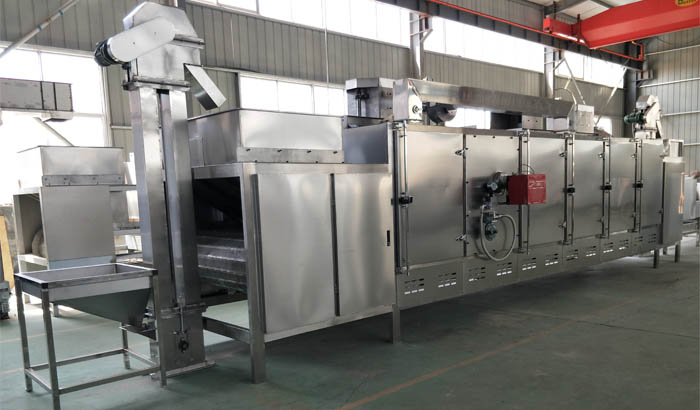

When operating a continuous nut roaster, especially a continuous belt nut roaster, you may occasionally encounter the problem of the conveyor belt failing to move. This issue not only reduces production efficiency but can also cause uneven roasting, directly affecting the quality and consistency of the final product. Understanding the root causes and implementing timely solutions is essential for maintaining the performance of your peanut roasting machine.
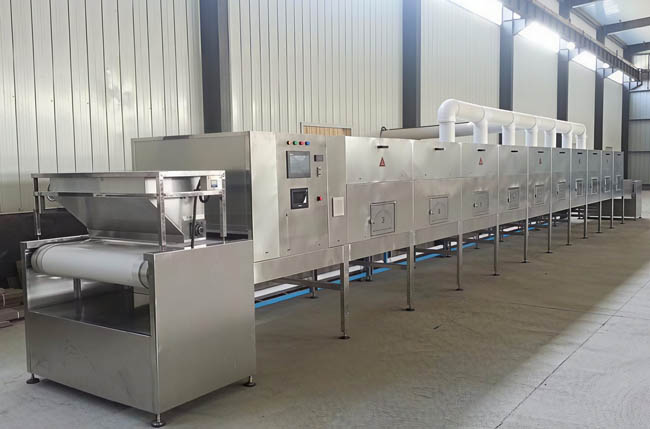
Below are the common causes and corresponding solutions, along with specific professional knowledge points to help you troubleshoot more effectively.
1. Motor Malfunction
Cause: The conveyor belt is driven by the motor. Motor failures—such as coil burnout, poor wiring connections, phase loss, or triggering of the overload protection—will prevent the belt from operating. In a continuous nut roaster, the motor typically operates under high-temperature and high-load conditions, making it vulnerable to insulation aging and bearing wear.
Professional Knowledge Point: Three-phase asynchronous motors are commonly used in industrial nut roasting equipment. If the motor overheats, check the current balance across all three phases. An unbalanced current often indicates a problem with the power supply or motor windings. Additionally, the thermal overload relay should be set according to the motor’s rated current to prevent nuisance tripping.
Solution: Check if the motor is running correctly and ensure all wiring connections are secure. Use a multimeter to test for continuity and voltage. If the motor is damaged, it must be repaired or replaced promptly. Regularly inspect motor bearings and apply high-temperature grease to reduce friction.
2. Transmission Device Problem
Cause: The transmission system of a continuous belt nut roaster includes components such as chains, sprockets, gears, and shafts. Wear, looseness, or jamming in these parts can prevent the belt from operating correctly. In peanut roasting, dust and oil residue can accelerate wear on chain and gear mechanisms.
Professional Knowledge Point: Chain drives are widely used in industrial roasting equipment due to their high torque capacity and durability. However, proper chain tension is critical—too loose causes slippage, while too tight increases bearing load and wear. The recommended sag for a chain drive is typically 2% of the center distance between sprockets.
Solution: Regularly inspect the transmission system, clear away any foreign objects, and apply food-grade lubricant. Promptly replace any components showing signs of severe wear. Check sprocket alignment to prevent uneven chain wear.
3. Belt Jamming
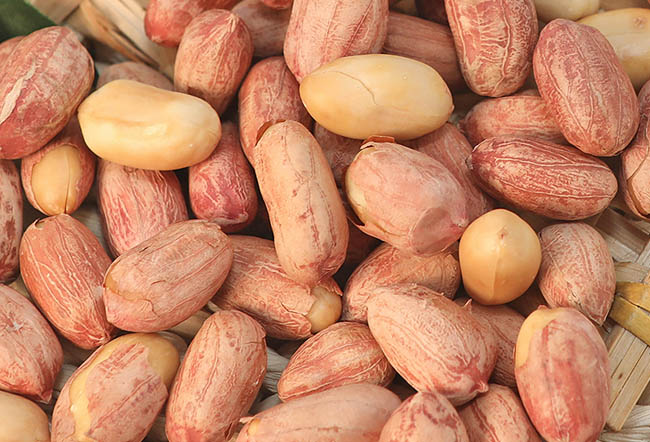
Cause: Peanuts or other debris falling onto the belt can cause it to jam. Additionally, deformation of the belt itself, misalignment, or improper tensioning can hinder operation. In a peanut roasting machine, the belt often operates at elevated temperatures, which can cause thermal expansion and stretching over time.
Professional Knowledge Point: Conveyor belts used in continuous nut roasters are typically made of stainless steel wire mesh or heat-resistant materials such as PTFE-coated fiberglass. These materials are chosen for their high-temperature resistance and food safety compliance. Belt tension should be adjusted according to the manufacturer’s specifications—excessive tension can damage the belt edges and bearings, while insufficient tension causes slippage.
Solution: Remove debris from the belt and check for deformation. If the belt is loose, adjust the tensioning mechanism to restore proper operation. Inspect belt tracking and adjust the idler pulleys to ensure the belt runs centered.
4. Control System Malfunction
Cause: The control system comprises the variable frequency drive (VFD), control panel, PLC, and wiring. A malfunction here can disrupt signal transmission, thereby affecting the movement of the conveyor belt. In advanced continuous nut roasters, the VFD controls the belt speed to regulate roasting time and temperature profiles.
Professional Knowledge Point: The VFD adjusts motor speed by changing the frequency and voltage supplied to the motor. Common VFD faults include overvoltage, undervoltage, overcurrent, and overheating. Parameters such as acceleration time, deceleration time, and torque boost must be set correctly for the specific load. A sudden stop of the belt may be caused by a VFD fault code—consult the VFD manual for diagnosis.
Solution: Check the control system for error alerts and verify that the VFD parameters are set correctly. Inspect all wiring for loose connections or signs of overheating. If necessary, have a qualified technician perform repairs. Regularly clean the control panel to prevent dust accumulation, which can cause short circuits.
5. Overload Operation
Cause: Placing an excessive amount of peanuts in the roaster can overload the conveyor belt, preventing it from moving properly. Overloading also leads to uneven roasting and increased energy consumption.
Professional Knowledge Point: Every continuous nut roaster has a rated capacity, typically expressed in kilograms per hour (kg/h). Exceeding this capacity not only stalls the belt but also reduces the heat transfer efficiency, resulting in under-roasted or burnt peanuts. The belt speed and roasting temperature must be balanced according to the load to achieve consistent quality.
Solution: Load peanuts according to the capacity specifications in the equipment manual to avoid overloading. Use a uniform feeding mechanism to ensure a consistent layer of peanuts on the belt. Monitor the motor current—if it consistently exceeds the rated value, reduce the feed rate.
Conclusion
There are various reasons why the conveyor belt of a continuous nut roaster might fail to move, involving components such as the motor, transmission system, the belt itself, and the control system. To ensure proper operation of your peanut roasting machine, users should perform regular maintenance and promptly clean and inspect critical components. Any issues detected should be addressed immediately to avoid compromising production efficiency and product quality.
By understanding these professional knowledge points and implementing a preventive maintenance schedule, you can minimize downtime and extend the service life of your continuous belt nut roaster. For more information on industrial nut roasting solutions, please contact our technical support team.