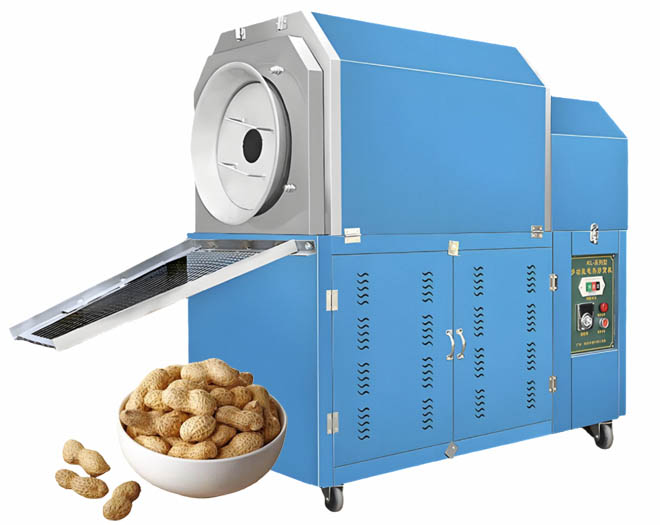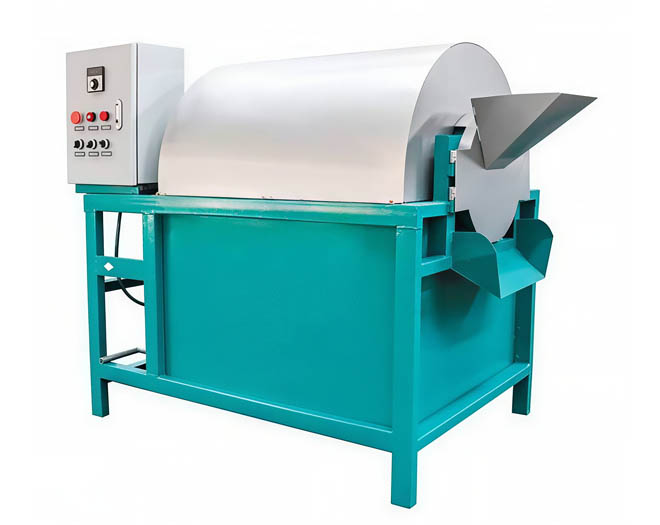

A nut roaster machine is widely used for roasting all kinds of nuts and seeds, including peanuts, melon seeds, walnuts, almonds, cashews, and chickpeas. It is valued for its high working efficiency, uniform roasting results, and simple operation. However, correct installation, startup, and shutdown procedures directly affect roasting quality, equipment lifespan, and operator safety. The following professional notes apply to any commercial nut roaster and are especially relevant for peanut roaster machine and melon seeds roaster machine users.

Notes in the use of peanut roaster machine:
1. Installation and Pre-Start Inspection
After receiving the nut roaster machine, place it on a smooth, level surface and secure it to avoid vibration during operation. Check the gearbox and add lubricating oil to the specified level before the first run — insufficient lubrication is one of the most common causes of gear wear in nut roasting equipment. Confirm that all fasteners, belts, and transmission components are properly tightened.
2. Electrical Safety and Voltage Verification
For your personal safety, connect the ground wire reliably before powering the machine. Check whether the voltage of the nut roaster for sale matches your local power supply and whether the wiring capacity is sufficient for the heating power rating. A stable, correctly grounded power supply protects both the operator and the electrical control system.
3. Correct Startup Sequence: Rotation First, Then Heating
Flip the invert switch and confirm that the drum of the nut roaster machine rotates normally before turning on the heating. This “rotation-first, heating-second” principle prevents local overheating and scorching of the drum surface. Once the machine runs smoothly, turn on the heating and adjust the temperature according to the material being processed.
4. Material Preparation and Selection
The melon seeds, peanuts, and other materials to be roasted should be evenly selected — remove impurities, stones, and damaged kernels — and kept ready for use. Uniform raw material size ensures consistent heat transfer and even roasting color, which is particularly important for a peanut roaster machine producing blanched or salted peanuts.
5. Roasting Medium and Temperature Control
After ignition and while the nut roaster machine is running, add a certain amount of refined salt or cleaned fine sand as the roasting medium. Heat the medium to about 50°C, then put the materials in for roasting, stirring until the materials turn yellow. The salt or sand medium conducts heat evenly and prevents the nuts from burning, a standard technique in nut roasting equipment for achieving uniform color and crispness.
6. Proper Shutdown and Cooling-Down Procedure
Before stopping the nut roaster for sale, move the switch from “invert” to “stop,” hold for two seconds, then from “stop” to “reverse.” Do not stop the machine immediately — let it continue rotating for about 20 minutes. This cooling-down rotation prevents residual heat from accumulating in one position, which can otherwise cause the drum to overheat and deform. Following this step significantly extends the service life of the nut roaster machine.
7. Routine Maintenance for Long-Term Performance
Clean the drum and roasting medium regularly, check the gearbox oil level, inspect the heating elements and wiring, and lubricate moving parts according to the maintenance schedule. Consistent maintenance keeps your peanut roaster machine and melon seeds roaster machine operating at peak efficiency season after season.
If you are searching for high quality nut roaster machine, contact us now by emails to get the latest price of it.
FAQ:
Q1: What is the ideal roasting temperature for a nut roaster machine?
A: It depends on the material. Peanuts are typically roasted at 160–180°C for 20–30 minutes, while melon seeds generally require 120–150°C. Always preheat the salt or sand medium to about 50°C before adding materials, and adjust the temperature gradually rather than jumping directly to the target. Overly high temperatures cause uneven roasting — burnt outside, raw inside.
Q2: Why must the drum rotate before the heating is turned on?
A: If the heating is switched on while the drum is stationary, heat concentrates on one section of the drum surface, causing local scorching, coating damage, and eventual deformation. Rotating first ensures the heat is distributed evenly and is a basic safety principle for any commercial nut roaster.
Q3: Why can’t I stop the peanut roaster machine immediately after roasting?
A: Residual heat in the drum and medium is significant. Stopping immediately traps that heat in one position, which can warp the drum and damage the coating. Letting the machine rotate for about 20 minutes allows gradual, even cooling — a simple step that greatly extends equipment life.
Q4: Can one nut roaster machine handle different types of nuts and seeds?
A: Yes. A well-designed nut roaster machine can process peanuts, melon seeds, walnuts, almonds, cashews, and chickpeas. However, roasting parameters — temperature, time, and medium ratio — must be adjusted for each material. Clean the drum between batches when switching materials to prevent flavor transfer.
Q5: What should I do if the roasted nuts come out unevenly colored?
A: Check three things: whether the raw materials were uniformly sized, whether the drum rotation speed is normal, and whether the medium-to-material ratio is appropriate. Too little medium or overloaded batches are the most common causes of uneven roasting in nut roasting equipment.