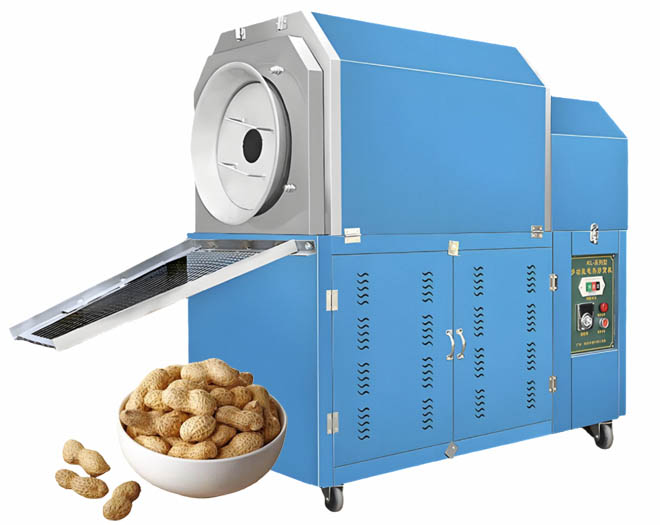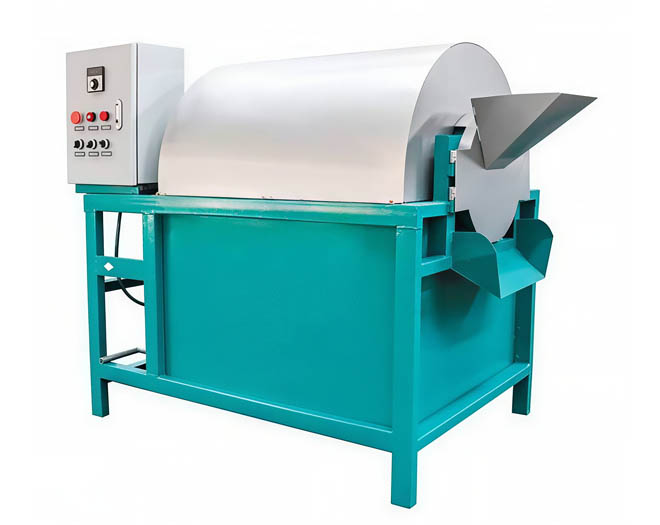

In the use of peanut roaster machine, in order to achieve higher working efficiency, the moisture content of peanuts is also required. If the peanuts are too dry, there would be high crushing rate; too wet of peanuts will affect the working efficiency of peanut roaster for sale also. Then, how to ensure that the moisture content of peanuts is appropriate before use the peanut roaster machine to roast?

Freshly harvested peanuts have a moisture content of up to 30%-50%. Because peanuts contain a lot of oil and fat, the heat capacity is high, so it should not be dried, sometimes it takes 5-6 sunny days to meet the storage requirements.
Three Practical Methods to Verify Moisture Readiness
1. The Auditory Test
Grab a representative handful of in-shell peanuts and shake them near your ear. A crisp, rattling sound indicates that the kernel has shrunk slightly within the shell and is no longer bound by surface moisture. This is a reliable field indicator that the shell-kernel interface has begun to separate, a sign that moisture has dropped into the acceptable range.
2. The Manual Abrasion Test
Shell a sample peanut and attempt to rub the seed coat (testa) with your thumb. If the skin slips off easily and the kernel beneath feels hard with no surface indentation, moisture is approaching the target. The cross-section of a properly dried kernel should appear ivory-white and uniform, without dark or translucent patches that signal uneven drying.
3. The Weight-Loss Method
This is the most quantitative field technique. Weigh a representative sample of in-shell peanuts before drying begins and again after the drying period concludes. A weight reduction of 28% to 30% corresponds to a final moisture content of approximately 10% or below—the threshold widely recognized as safe for storage and suitable for feeding into a peanut roaster machine. For processors requiring greater precision, a calibrated grain moisture meter or oven-drying method should be used to confirm the weight-loss estimate.
The Target Moisture Window for Roasting
While 10% is the upper limit for safe storage, the optimal moisture content for roasting is tighter. Industry practice and published curing guidelines suggest that peanuts should be dried to an average moisture content between 8% and 10% before roasting. Some specialty processors target even lower ranges, around 7–8%, for specific product profiles.
It is equally important to avoid over-drying. Peanuts dried below 7% become brittle and prone to splitting during shelling and conveying.

We provide high quality peanut roaster machine for users all over the world. If you are interested in our products, contact us by emails now to get more information about it.
Q: What is the ideal moisture content for peanuts before roasting?
A: The practical target is 8–10% average moisture, with no portion of the lot below 7%. This range balances roast efficiency, kernel integrity, and finished product shelf life.
Q: How can I estimate peanut moisture without a meter?
A: The weight-loss method is the most reliable field technique. A 28–30% reduction from initial field weight typically corresponds to ≤10% moisture. This should be confirmed with a calibrated meter for commercial roasting operations.
Q: What happens if I roast peanuts that are too wet?
A: Excess moisture requires longer roasting time to achieve target color, causing surface cell damage and elongated ruptures from steam escape. The finished product may also develop off-flavors faster during storage due to higher initial moisture and oil uptake variability.
Q: Can my peanut roaster machine compensate for inconsistent moisture?
A: Continuous multi-zone roasters offer some buffering capacity through adjustable first-zone drying, but no roaster can fully correct severe moisture variability. Pre-roast screening and lot segregation remain the most effective controls.