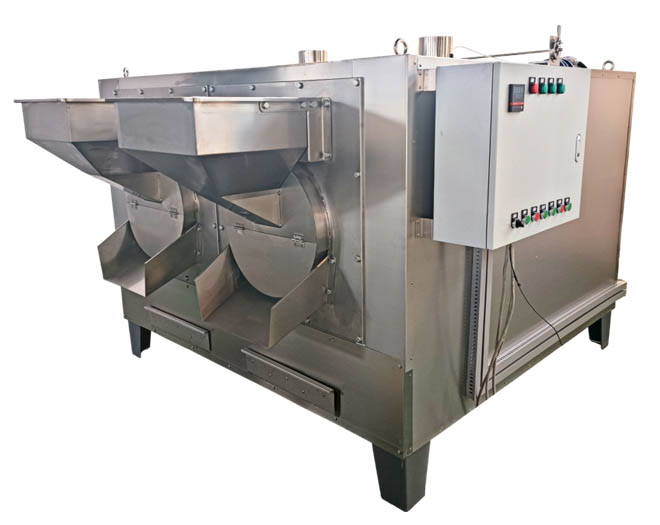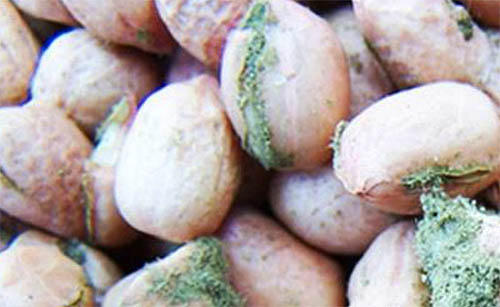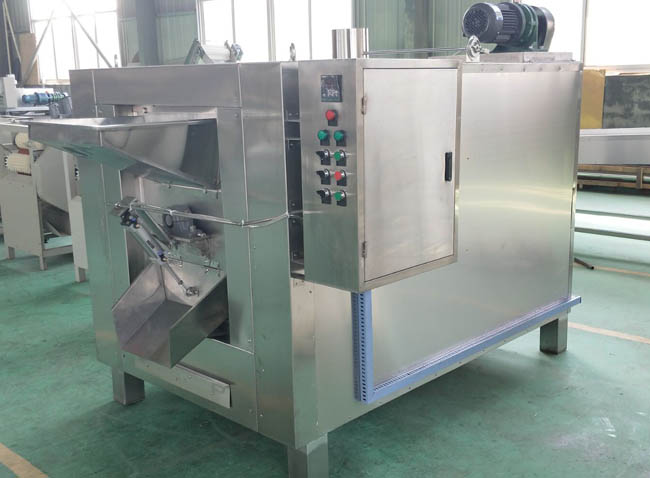

The key to choose a suitable peanut roasting machine is to weigh the cost, quality, environmental protection and safety, etc. The following is a detailed comparison between electric heating and gas heating peanut roasting machine.
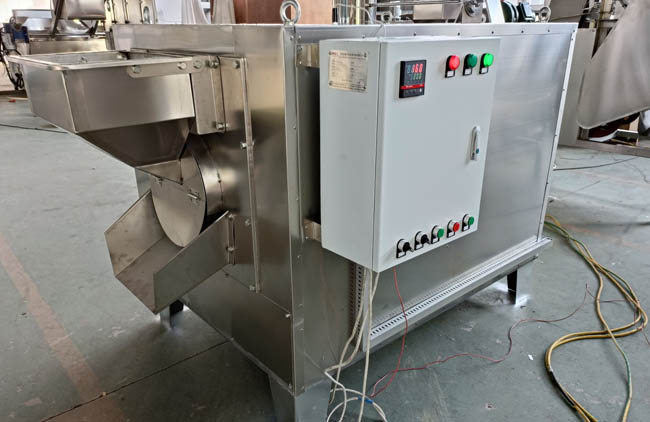
1. Electric Peanut Roasting Machine – Precision & Clean Operation
Advantages:
- Environmental protection and sanitation: No burning waste gas and smoke, clean roasting environment, and products are not easy to have odor, which is more favored by high-end markets and export standards.
- Superior Temperature Uniformity (±2°C): Electric heating elements (e.g., stainless steel sheathed rods) combined with forced-air circulation systems minimize hot spots. This ensures consistent Maillard reaction and caramelization across all peanut kernels, reducing scorch rates to <1% in commercial batch tests.
- Worry-free operation: High degree of automation, basically “set-up”, simple maintenance, no risk of gas leakage.
Points to note:
- Operating costs: In areas with high electricity prices, electricity bills may be more expensive than gas bills.
- Electricity dependence: Requirements exist for the plant’s power supply capacity (e.g., requiring three-phase power) and stability.
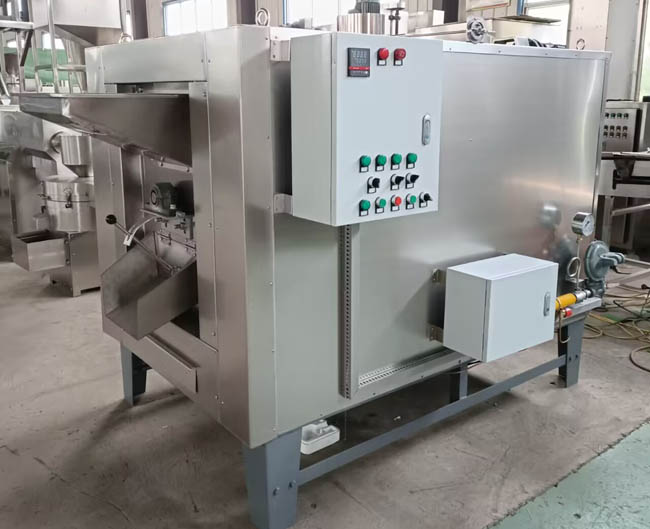
2. Gas-Heated Peanut Roasting Machine – High Throughput & Flavor Profile
Advantages:
- Rapid heat-up & recovery: Direct-fired gas burners (natural gas or LPG) can reach 200°C in 8–12 minutes, compared to 15–20 minutes for electric. This reduces idle time in multi-shift operations and supports peak-season surge capacity.
- Lower cost: In areas where natural gas or liquefied gas is cheap, the fuel cost advantage is obvious.
- Unique flavor: Some processes show that gas roasting can give peanuts a more fragrant and strong wind taste.
Points to note:
- Difficulty in temperature control: The temperature fluctuates greatly, so it needs good equipment to control the temperature evenly, otherwise it is easy to scorch or roast unevenly.
- Environmental protection and safety: Waste gas will be generated (emission should be considered), and there are potential safety hazards such as gas leakage and fire, which requires high ventilation and installation of the plant.
- Complex maintenance: Burners and pipelines need regular professional maintenance, and the operating threshold is relatively high.
3. Side-by-Side Technical Comparison Table
| Parameter | Electric Heating | Gas Heating (Natural Gas/LPG) |
|---|---|---|
| Thermal Efficiency | 92–96% (element to product) | 78–85% (stack losses included) |
| Temp. Stability | ±2°C (PID-controlled) | ±6–10°C (without advanced control) |
| Heat-up Rate | 3–5°C/min | 8–12°C/min |
| Energy Cost (per ton) | $18–25 (at $0.15/kWh) | $12–18 (at $7/MMBtu) |
| Maintenance Interval | 500–800 hrs (element check) | 200–300 hrs (burner & flue cleaning) |
| Installation Cost | Medium (electrical upgrade) | High (piping, exhaust, permits) |
| Product Moisture Loss | 1.5–2.0% (gentle) | 2.5–3.2% (faster, more shrinkage) |
| Acrylamide Risk | Lower (precise end-point control) | Higher (if overheating occurs) |
4. Decision Framework – Which Peanut Roasting Machine Fits Your Line?
- Choose Electric If:
- You produce premium/organic peanuts for retail or pharmaceutical (low impurity, consistent color grade).
- Your facility is in a residential or emission-controlled zone.
- Your daily output is < 2 tons and electricity is < $0.12/kWh.
- You prioritize low operator training and minimal fire risk.
- Choose Gas If:
- You run 24/7 continuous roasting with capacity > 3 tons/day and gas is locally abundant.
- You aim for a signature “wood-fire” or “traditional” flavor profile.
- You have an existing exhaust infrastructure and skilled maintenance team.
- Your production schedule allows periodic temperature calibration and burner tuning.
5. Hybrid Solution – Dual-Fuel Peanut Roasters
Modern peanut roasting equipment now offers switchable electric/gas systems. They use electric for low-load batches (e.g., sample roasting or night shifts) and gas for peak production. This reduces energy risk and allows arbitrage between fuel prices. However, initial investment is 25–40% higher and control logic becomes more complex – suitable only for large-scale peanut processing plants with dynamic production planning.
Electric heating and gas heating have their own advantages and disadvantages. When choosing, we need to comprehensively consider our actual needs and choose the equipment that best suits our needs. Need a tailored sizing and energy simulation? Contact our application engineers with your batch size, local utility rates, and desired output color (Lab* values) – we’ll help you select the optimal peanut roasting machine for your unique workflow.