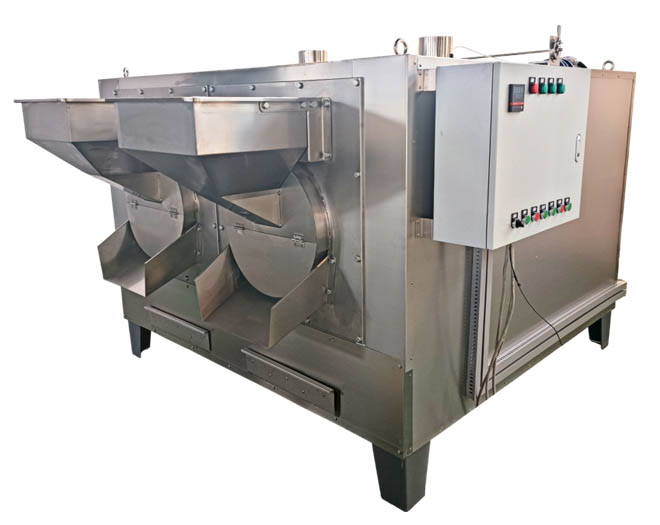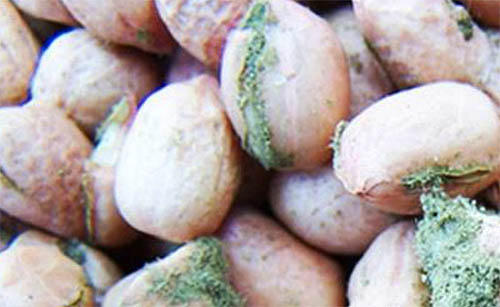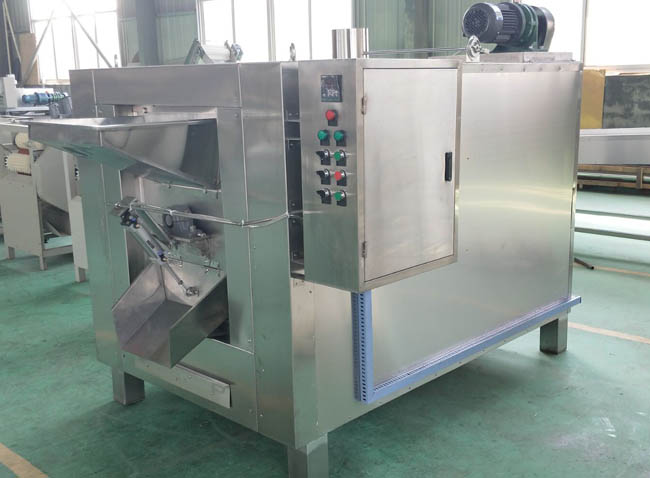

Peanut roasting machines are indispensable equipment in food processing equipment and are widely used in nut processing plants, snack food production lines, and the confectionery industry. During daily operation, peanut roasters inevitably generate various types of waste. Proper management of these byproducts is not only crucial for maintaining machine performance and product hygiene but is also a prerequisite for meeting domestic and international environmental standards.
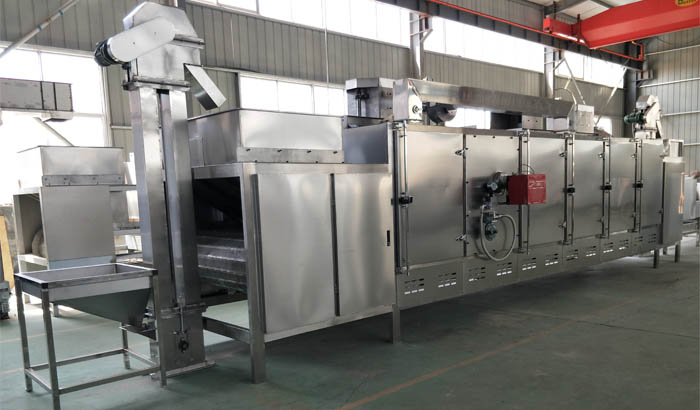
1. Peanut Fragments and Granular Residues
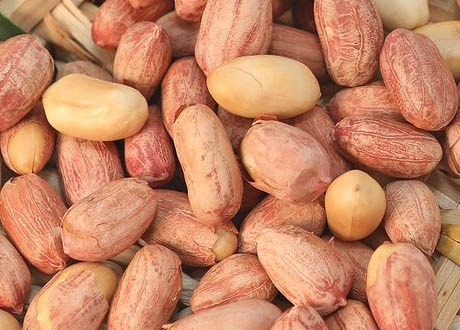
During the roasting process, mechanical agitation and hot-air circulation cause peanut skins, loose seed coats, and broken kernels to separate. These peanut byproducts typically include:
- Outer seed coats (testa) — rich in dietary fiber and polyphenols
- Broken cotyledon granules — containing residual oil and protein
- Fine dust—fine particles generated by friction between peanuts and the roasting drum
Environmental and Operational Impacts:
Although these residues are biodegradable and non-toxic, their accumulation in the roasting chamber reduces heat transfer efficiency, increases energy consumption, and creates a breeding ground for microorganisms, thereby posing food safety risks (for example, if moisture is present, it may lead to aflatoxin contamination).
Advanced Treatment and Reuse Strategies:
- Dedicated filtration systems – Multi-stage cyclone separators or baghouse dust collectors can capture more than 95% of particles larger than 5 micrometers, thereby protecting downstream exhaust fans.
- Automated brushing or scrapers – Installed inside the drum to remove adhered residue during continuous operation.
- Value-added applications – Collected peanut hulls and fine dust can be reused as:
- High-fiber animal feed additives (after sterilization)
- Raw material for pressing low-grade peanut oil
- Compost feedstock or biomass fuel (calorific value ≈ 18–20 MJ/kg)
2. Smoke and waste gas
If the peanut roaster is heated by coal or gas, a small amount of smoke or waste gas, such as carbon dioxide and nitrogen oxides, may be generated during the combustion process. If these gases are directly discharged, they may have a certain impact on air quality. Therefore, modern peanut roasting machines are usually equipped with smoke exhaust pipes or purification devices to reduce pollutant emissions through filtration or adsorption technology to ensure compliance with environmental protection requirements.
Pro Tip: For electric or infrared peanut roasting machines, flue gas issues are virtually eliminated, making them a cleaner alternative in regions with strict air quality regulations.
3. Equipment cleaning waste
In the process of equipment cleaning, a certain amount of cleaning waste, such as cleaning water, oil stain or residue, may be generated. These wastes need to be classified according to the specific situation. For example, oily wastewater needs to be treated by an oil-water separator before being discharged to avoid pollution to water resources.
In a word, although the peanut roasting machine will produce a certain amount of wastes in the production process, the impact on the environment can be effectively reduced through scientific management and the application of environmental protection technology. Enterprises should strictly abide by environmental protection laws and regulations in production, actively take measures to realize green production and make contributions to sustainable development.