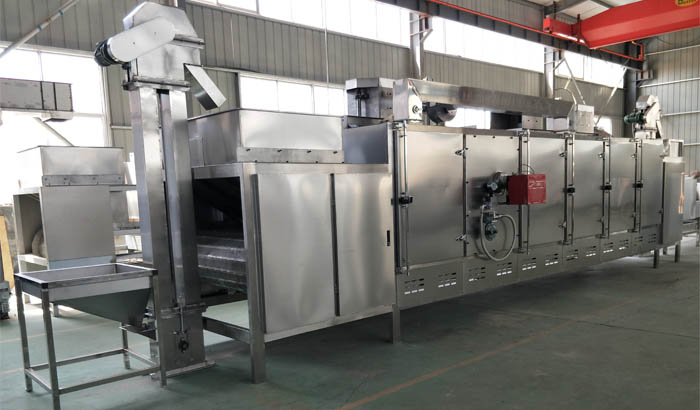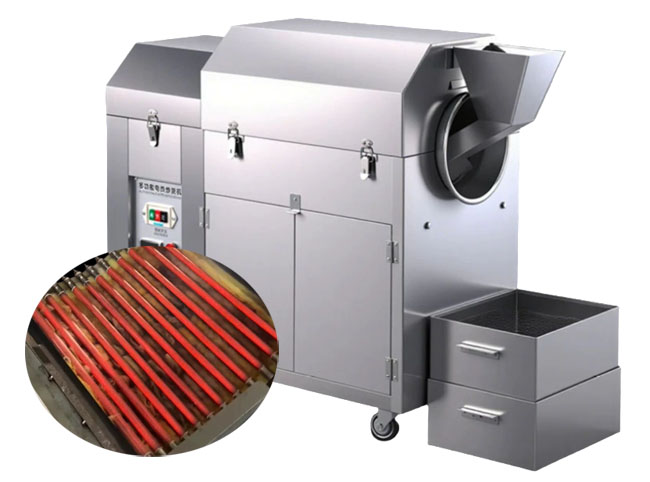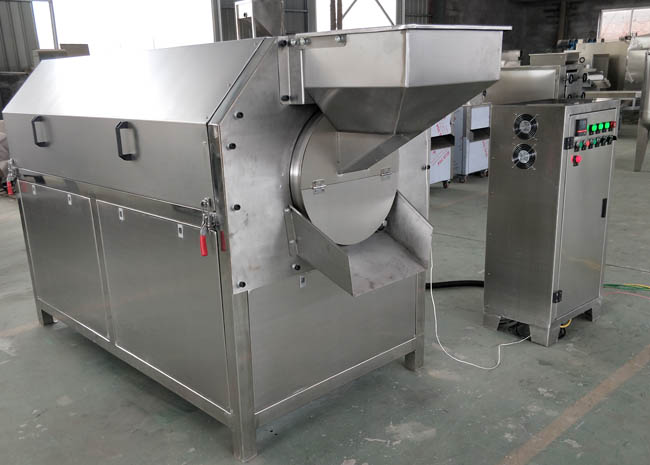

The chain plate roaster (also widely known as a nut roaster or continuous nut roasting system) is specifically designed for high-capacity, uninterrupted processing of free-flowing, highly porous materials such as sliced almonds, peanuts, sunflower seeds, pumpkin seeds, and granular spices. In this system, the material is evenly distributed on heat-resistant alloy steel chain plates, which are driven by a precision roller chain and sequentially pass through a preheating zone, a high-temperature drying/roasting zone, and a forced-air cooling zone. Heat sources typically include resistance heating elements, natural gas burners, or biomass hot-air generators, utilizing bidirectional (upward and downward) forced convection hot-air impingement to maximize the heat transfer coefficient and moisture evaporation rate.
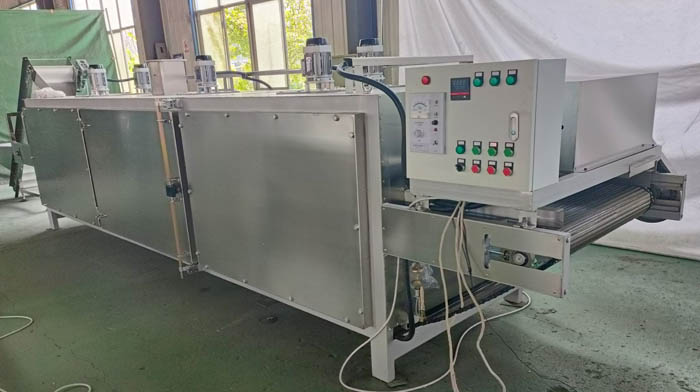
To maintain optimal thermal efficiency, product uniformity, and operational safety, the following professional maintenance checklist must be strictly followed to ensure that your chain plate roaster delivers consistent roasting curves and complies with food safety standards.
1. Temperature Controller Shutdown Procedure (Solenoid Valve Protection)
At the end of each production shift, be sure to turn the temperature adjustment potentiometer (or the setpoint on the digital PID controller) to the zero/cold position before disconnecting the main power supply. This action de-energizes the solenoid valve (gas-fired models) or solid-state relay (electric models), preventing residual thermal expansion from damaging the valve seat or contactor. Proper shutdown procedures reduce inrush current stress and can extend the service life of solenoid valves by up to 40%, particularly in environments with frequent start-stop cycles.
2. Pre-Startup Filter Differential Pressure Check
Before each startup, check the main air intake filter (typically a G4/F5 bag filter or stainless steel mesh pre-filter) for particulate buildup. Filter clogging can cause the static pressure drop (ΔP) to exceed the design range of 150–200 Pa, resulting in a reduction in airflow (CFM) of up to 30%. This directly reduces the convective heat transfer coefficient (h), leading to extended drying times, incomplete moisture removal (final moisture content > 2%), and increased energy consumption (kWh/kg of product). When the pressure differential (ΔP) exceeds 250 Pa, the filter should be cleaned or replaced. For heavy-duty operations, a micro-differential pressure gauge should be installed for real-time monitoring.
3. Monthly Cleaning Schedule for Exhaust Ducts and Elbows
Exhaust ducts, particularly 90° elbows and horizontal sections, accumulate fine dust, oil vapors, and caramel residues generated during the nut roasting process. Perform mechanical cleaning monthly using a rotating brush or compressed air (6–8 bar). Accumulated deposits reduce the effective exhaust diameter, increase back pressure, and decrease the system’s dew point removal capacity. This extends drying cycles by 15–20% and increases the risk of fire due to spontaneous combustion of grease residues. Install inspection ports at each elbow to facilitate visual inspections.
4. Bearing Housing Lubrication (Monthly Grease Replenishment)
Each chain plate roaster contains 6–10 sealed or open-type bearing seats (typically UCP 205–210 series) supporting the drive shaft, tension shaft, and cooling fan rotors. Add high-temperature lithium-complex grease (NLGI grade 2, dropping point > 260°C) monthly—approximately 5–10 grams per bearing using a manual grease gun. Excessive grease can cause seal failure; insufficient grease can lead to frictional heat (>70°C) and premature spalling of the raceways. For bearings located near heat-generating areas (ambient temperature >150°C), use a synthetic PAO-based grease with anti-wear additives instead.

5. Chain Tension and Pitch Wear Measurement
Roller chains (typically ANSI 80–120 series) will stretch due to pin/bushing wear. Measure the chain pitch (in increments of 10 links) monthly—if the elongation exceeds 2% of the original length, replace the chain to prevent it from skipping on the sprockets. Maintain chain tension: Adjust the tensioning screw so that the sag of the chain at the midpoint between the sprockets is 10–15 millimeters. Improper tension can cause vibration, noise, and uneven tray operation, directly affecting product color uniformity (ΔE value).
6. Thermocouple Calibration and Temperature Curve Verification
The nut roaster uses Type K or PT100 thermocouples, installed in each roasting zone. Perform a two-point calibration every 6 months (using a dry calibrator at 100°C and 200°C, respectively). If the drift exceeds ±2°C, the sensor must be replaced. Additionally, use an infrared thermal imager to map the surface temperature of the chain drum—to ensure uniform roasting, the temperature deviation across the width should not exceed ±5°C. Record these temperature curves for quality traceability.
Proactive Spare Parts Inventory Management to Minimize Downtime
Keep key spare parts on-site: drive chain (2 meters), bearing assemblies (4), air filters (6), thermocouples (3), and solenoid valve coils (2). This can reduce the Mean Time to Repair (MTTR) for common failures from 8 hours to less than 1.5 hours.
Energy-Saving Optimization Tips
By cleaning filters, calibrating thermocouples, and maintaining proper chain tension, your chain plate roaster can achieve thermal efficiency of over 78% (compared to just 65% for poorly maintained equipment). This translates to savings of 12–18 cubic meters of natural gas per metric ton of roasted nuts, directly improving your carbon footprint and reducing operating costs per kilogram.
Conclusion
Regular, systematic maintenance of your chain plate nut roaster machine is not merely a recommendation—it is a prerequisite for ensuring consistent product quality, workplace safety, and profitability. Implement this ten-step process, document all operations, and train operators to perform daily visual inspections.
Optimize your roasting line today—because every nut deserves to be roasted to perfection.