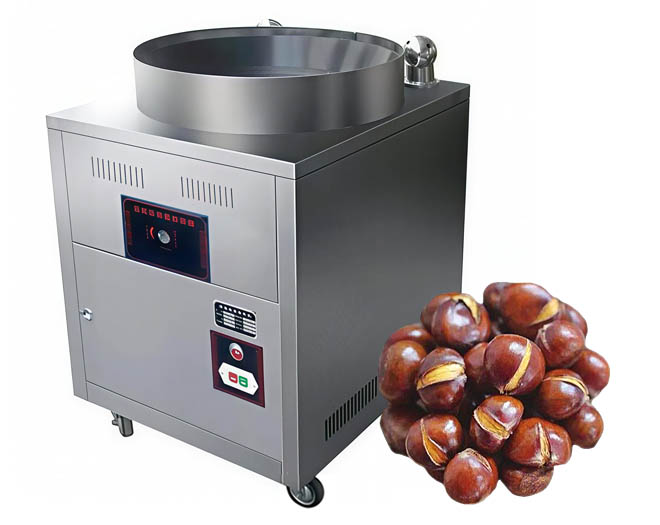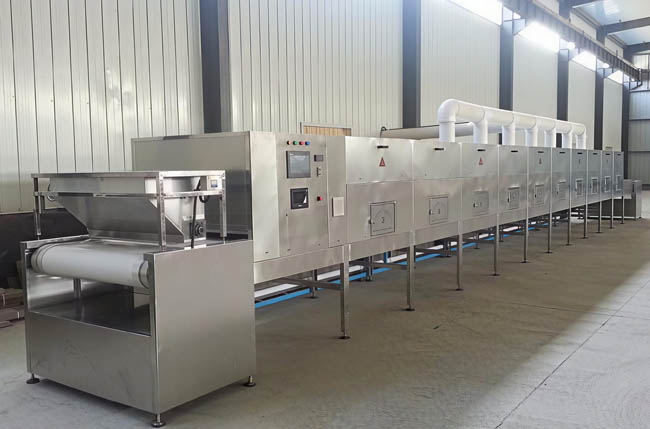

Peanut roasting machine is widely used in the food processing industry for roasting peanuts, almonds, cashews, and other nuts. Its price ranges from several thousand yuan to several hundred thousand yuan. This significant price difference is mainly determined by the following five core factors.
1. Production Capacity (Throughput and Specifications)
Production capacity is the fundamental factor affecting peanut roasting machine price. The larger the drum volume and the higher the hourly throughput, the higher the equipment cost. Small batch roasters are ideal for families, shops, or small workshops and come at a lower price. Medium-sized continuous nut roasting machines and large-scale automatic production lines are designed for industrial output, with prices rising accordingly. Buyers should match capacity (kg/h) to their actual daily output to avoid over- or under-investing.

2. Heating Mode and Heat Source
The heating method strongly influences both equipment cost and long-term operating cost:
- Electric heating: Low initial purchase cost, but high power consumption during operation, leading to higher long-term use costs.
- Gas heating: Requires a combustion chamber and air induction system; slightly higher initial investment but lower operating cost—often the most economical choice for continuous production.
- Electromagnetic heating: Accurate temperature control and high thermal efficiency, but higher equipment cost.
- Microwave heating: Advanced technology suitable for high-value-added products, but the equipment is expensive.
3. Automation Level and Control Configuration
The degree of automation and control system complexity also affect the price of a peanut roaster:
- Basic type: Mechanical knob temperature control and manual discharge; lowest price.
- Mid-range type: PID intelligent temperature control, frequency conversion speed regulation, and automatic tilting discharge; moderate price.
- High-end type: PLC + touch screen centralized control with recipe storage, data logging, and linkage to feeding, cooling, and seasoning lines; price increases exponentially.
4. Manufacturing Materials and Workmanship
Material and craftsmanship directly affect equipment quality and service life. Using 304 food-grade stainless steel in food-contact parts is more durable and meets food safety standards, but costs more than 201 stainless steel or carbon steel. Wall thickness and insulation also matter: high-quality machines typically use 2–3 mm thick walls with 50–100 mm insulation layers to reduce heat loss. Welding quality, bearing brand, and sealing design further influence performance and overall price.
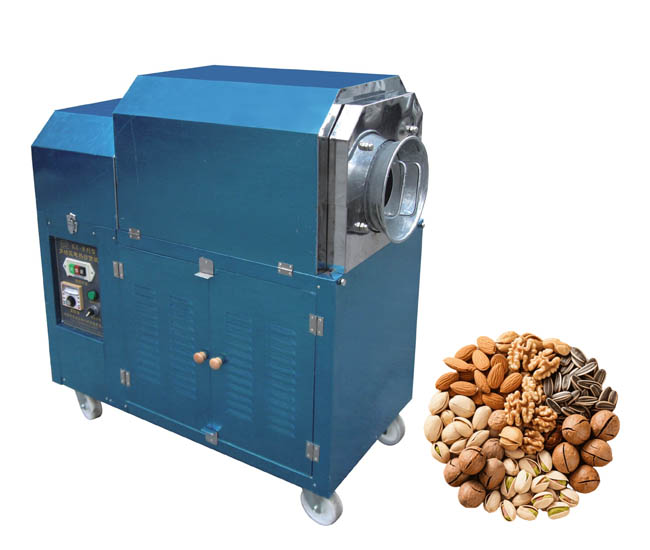
5. Equipment Structure Type
Different structural designs suit different production requirements, with considerable cost differences:
- Drum type: Suitable for small and medium-sized production; simple structure and high cost-performance.
- Belt (mesh belt) roaster: Hot air circulation system for mass continuous production; higher cost.
- Swing type or microwave type: Designed for special processes; usually priced higher.
Besides, the brand premium, whether the installation and debugging costs are included, the configuration of energy-saving devices and customization requirements will also have a certain impact on the equipment price. Therefore, when purchasing a peanut roasting machine we should comprehensively consider the above factors according to our own needs to choose the most suitable equipment.