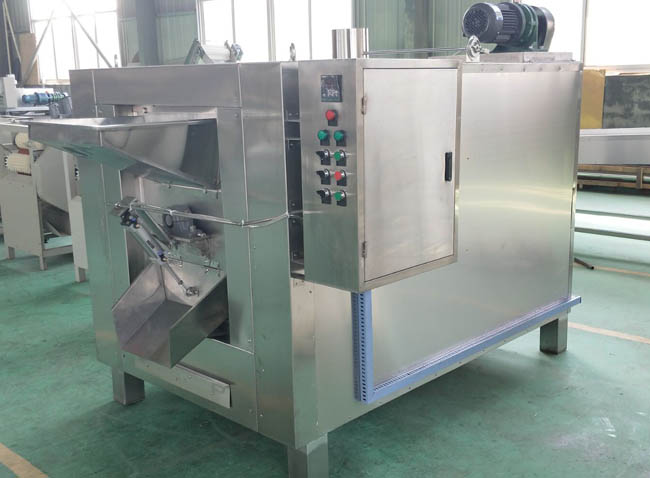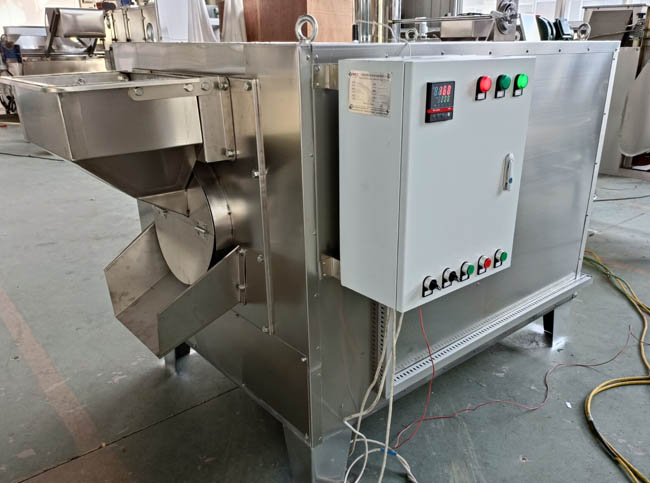

In the field of food processing, peanut roasting machine is a common equipment, which is often used to improve the aroma of peanuts by high temperature roasting or to prepare for subsequent deep processing. However, some people mistakenly think that aflatoxin in peanuts can be removed by high temperature roasting in peanut roaster. In fact, this idea is an extremely dangerous misunderstanding, which can not solve the problem, but may bring serious food safety hazards.
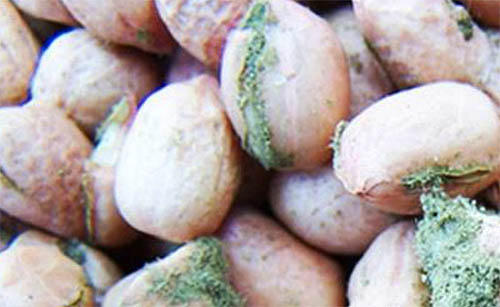
The heat resistance of aflatoxin is beyond imagination.
Aflatoxin, especially the most toxic B1, is an extremely heat-resistant toxin. The research shows that its decomposition temperature needs to reach above 280°C, while the working temperature of ordinary peanut roasting machine is usually between 160°C and 220°C (the actual roasting temperature depends on peanut raw materials and models), which is far from the condition of destroying aflatoxin. In this case, aflatoxin will hardly be affected and will continue to remain in peanuts.
High temperature treatment is also difficult to “detoxify”
Even if the roasting temperature is raised above 280°C in theory to try to decompose aflatoxin, the peanut itself has already burnt, carbonized and even burned at this temperature, completely losing its edible value. In addition, even if it is treated at a certain high temperature for a long time, it can only “reduce” a part of the aflatoxin content, rather than completely “remove” or “clear”. If the raw materials themselves are already moldy and exceed the standard, they may still exceed the standard after roasting, and the food safety risk still exists.
Correct method to solve the problem of aflatoxin
The key to fight aflatoxin lies in raw material management, not in post-processing. Here are a few core suggestions:
- Strictly screen raw materials: use fresh and mildew-free peanuts as processing raw materials to prevent aflatoxin pollution from the source.
- Standardize storage conditions: avoid peanuts from being damp and moldy, and keep a dry and ventilated storage environment.
- Dispose of spoiled peanuts in time: once the peanuts are found to be mildewed, they should be discarded or destroyed immediately, and do not try to “repair” them in any way.
Overall, the main purpose of peanut roasting is to improve flavor and texture, not to remove harmful substances. For a strong carcinogen such as aflatoxin, any attempt to “detoxify” through simple processing is unscientific and irresponsible. Food safety is no small matter, and starting from the source is the most reliable solution. Remember, good peanuts help to roast good products!