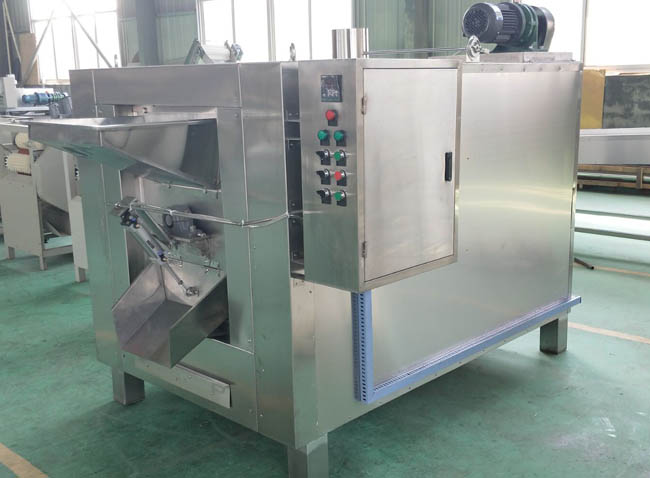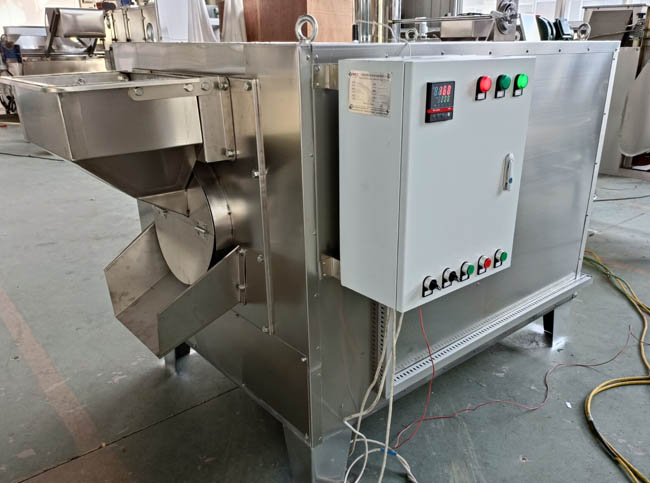

Evaluating the roasting effect of peanut roasting machine is an important link to ensure product quality and production efficiency. In order to comprehensively analyze the roasting effect, we can evaluate it from the following three main dimensions: sensory indicators, physicochemical indicators, and equipment operating efficiency.
I. Sensory Indicators

Sensory indicators are the source of consumers’ first impression of a product and directly affect market acceptance. They mainly include the following aspects:
- Appearance: High-quality roasted peanuts should have a uniform color, without obvious burnt spots or undercooked appearance. The uniformity of color reflects the temperature control stability of the peanut roasting machine.
- Texture: Peanuts should have a crisp but not hard texture. If the texture is too soft or too dry and hard, it may indicate that the roasting time or temperature was unsuitable.
- Flavor: The unique aroma of peanuts is an important indicator of their roasting quality. High-quality roasted peanuts should emit a rich aroma, without any off-odors or burnt smell.
II. Physicochemical Indicators
Physicochemical indicators are important parameters for measuring the internal quality of peanuts. Scientific testing can quantify the roasting effect.
- Moisture content: Moisture content directly affects the shelf life and taste of the roasted peanuts. Generally, properly roasted peanuts should have a moisture content controlled within a reasonable range (usually 2%-3%). Excessive moisture will result in a less crisp product that is prone to mold; while insufficient moisture may lead to an overly dry and hard texture.
- Crispness: Crispness is an important physical indicator for measuring the taste of peanuts. It can be measured using professional instruments to determine the force required to break the peanut. Moderate crispness satisfies consumers’ chewing needs.
- Uniformity: Physicochemical indicators also include the uniformity between peanut kernels, ensuring that there are no significant differences in moisture content and texture within the same batch of peanuts.
III. Equipment Operating Efficiency

Besides the quality of roasted peanuts, equipment operating efficiency is also a crucial aspect of evaluating roaster performance.
- Temperature control accuracy: The ability of the equipment to maintain stability within the set temperature range is critical to the quality of roasted peanuts. Poor temperature control leads to uneven heating of peanuts, affecting overall quality.
- Energy consumption: Energy-efficient peanut roasting machines not only reduce production costs but also decrease environmental impact. Assessing the equipment’s energy consumption is an important indicator of its efficiency.
- Capacity and stability: Whether the equipment can maintain stable performance over extended periods and whether it can meet the demands of large-scale production are also key considerations.
In conclusion, evaluating the roasting effect of a peanut roasting machine requires comprehensive consideration of sensory, physicochemical, and equipment performance factors. Through scientific and reasonable evaluation methods, not only can the quality of peanut products be improved, but the production process can also be optimized, enterprise efficiency increased, and consumers provided with higher-quality products.