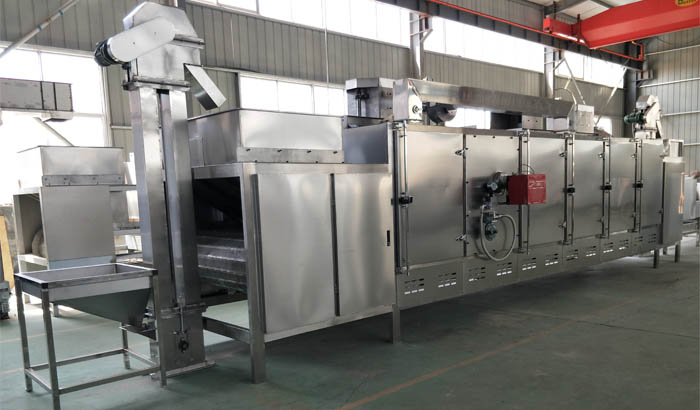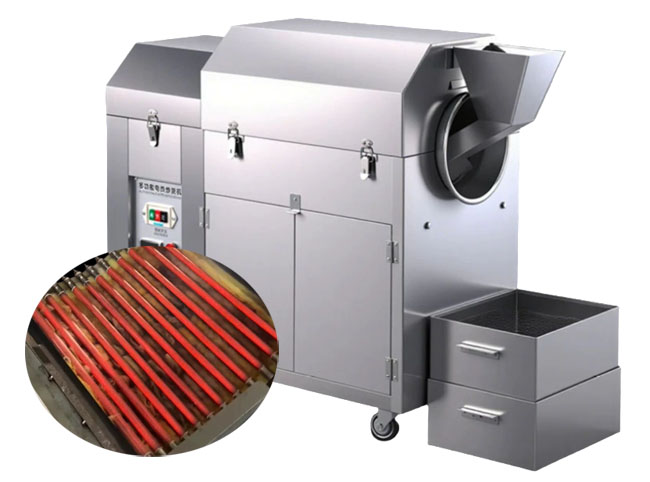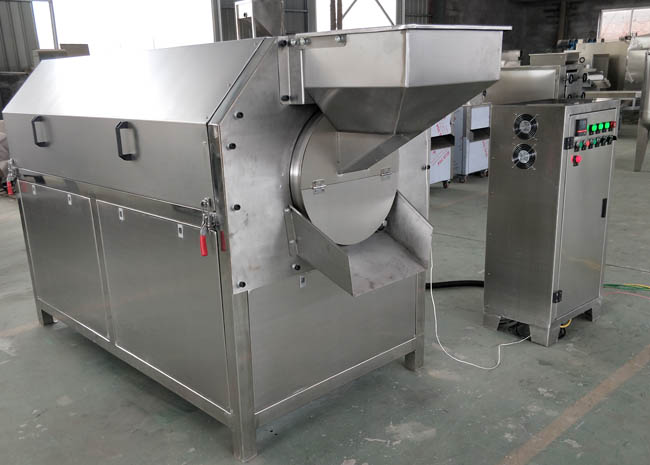

The performance of nut roasting machines depends not only on equipment design but also on raw material characteristics. Understanding peanut moisture content, variety, and roasting parameters helps improve roasting quality and production efficiency.
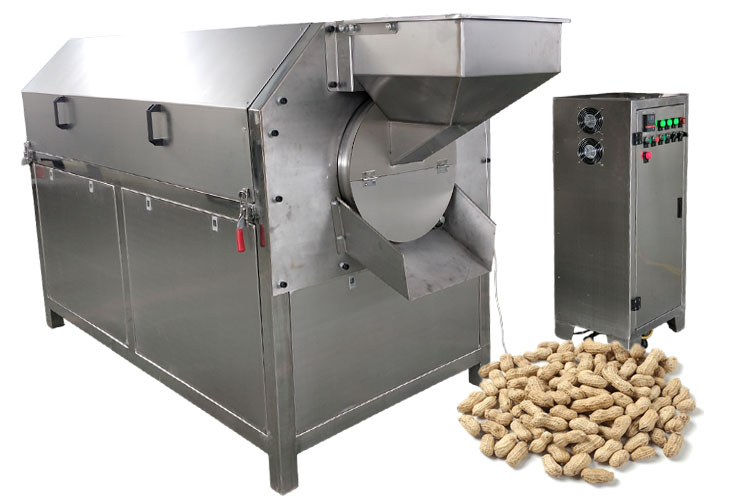
Nut roasting machines are widely used in the food processing industry for roasting peanuts, almonds, cashews, sunflower seeds, and other nuts. Among these, peanut roasting machines are one of the most commonly used pieces of equipment in peanut processing plants, snack food factories, and peanut butter production lines. The purpose of roasting is to enhance flavor, aroma, and texture while reducing moisture content and extending shelf life. However, final roasting quality depends not solely on the machine’s heating system or structure. Raw material characteristics, particularly those of peanuts, play a crucial role in determining roasting performance and product quality.
1. Moisture Content of Peanuts
Moisture content is one of the most significant factors affecting peanut roasting machine performance.
Excessively moist peanuts require more time and energy to roast. High moisture also leads to uneven roasting, resulting in overcooked exteriors and undercooked interiors. Conversely, peanuts with extremely low moisture may roast too quickly, yielding dry, astringent textures and diminished flavor. In industrial processing, peanuts are typically pre-dried or moisture-adjusted before entering the roaster. Maintaining appropriate moisture content helps ensure uniform heat transfer and consistent roasting results.
2. Peanut Variety and Physical Characteristics
Different peanut varieties vary in size, shape, and oil content, factors that directly impact the roasting process. For instance, larger peanuts require longer roasting times or higher temperatures to achieve even heating. Smaller peanuts heat faster and may need shorter roasting cycles. High-oil varieties release more fat during roasting, which can enhance flavor but also increase the risk of overheating. When using industrial nut roasting machines, operators typically adjust roasting parameters based on peanut variety to achieve optimal results.
3. Surface Cleanliness and Raw Material Quality
Peanut cleanliness is another factor affecting roasting outcomes.
Before roasting, peanuts may contain dust, plant debris, or broken shells. If these impurities remain on the surface, they can burn during high-temperature roasting, producing off-flavors or causing contamination. Additionally, impurities can obstruct airflow within the roaster. Therefore, peanuts should undergo cleaning, screening, and grading before entering the peanut roasting machine. Proper pre-treatment contributes to stable roasting results and enhanced food safety.
4. Importance of Uniform Heating
High-quality nut roasting machines are designed to ensure even heating and continuous material mixing. Uniform roasting is critical for commercial food production, as it guarantees consistent color and flavor, superior texture, and optimal crispness.
Conclusion
The roasting performance of nut roasting machines or peanut roasters depends not only on equipment design and capabilities but also on raw material characteristics. By understanding these factors and adjusting operating conditions accordingly, food processors can achieve uniform roasting, enhance flavor, and improve production efficiency. In modern peanut processing plants, selecting appropriate industrial nut roasting equipment and properly managing raw materials are key to producing high-quality roasted peanuts and nut products.